Table of Contents
Navigating professional conversations as a non-native speaker can feel intimidating. You want to participate fully, yet asking a question might make you feel exposed or less intelligent. Fortunately, you can ask what someone means confidently while maintaining credibility. By combining neutral phrasing, cultural awareness, and practical exercises, non-native speakers can communicate assertively and clearly. This skill is essential for workplace success and leadership growth.

The Importance of Clarifying Meaning
Misunderstandings in professional settings can lead to errors, wasted time, and miscommunication. According to Harvard Business Review, leaders who ask clarifying questions are often seen as engaged and competent. Asking questions strategically:
- Reduces mistakes
- Demonstrates active listening
- Shows critical thinking

Research shows unclear communication can decrease team productivity by up to 25%. Therefore, knowing how to ask what someone means confidently is not a weakness—it’s a leadership strength.
Phrasing Techniques for Confidence
Non-native speakers often hesitate to ask questions, fearing they might sound unsure. Using neutral, polite phrasing preserves authority while ensuring understanding. Examples include:
- “Could you clarify what you mean by…?”
- “I want to make sure I understand your point correctly…”
- “So, if I’m following, you’re suggesting…”
Mirroring or paraphrasing helps confirm understanding. For example:
“So, the project deadline moves to Friday instead of Thursday, correct?”
Follow-up questions demonstrate engagement:
- “Can you give an example of how that works in practice?”
- “Could you explain that from another angle?”

Role-playing these scenarios with a coach or peer can increase comfort. For structured practice, check out our Storytelling Essentials Program and Networking Powerhouse Program, which offer exercises for non-native speakers.
Cultural Awareness and Tone
Different cultures interpret questions differently. In some workplaces, direct questions show interest; in others, they might seem confrontational. Strategies include:
- Adjust phrasing to match cultural context
- Use calm, friendly body language
- Monitor tone and inflection
Experts at Forbes note that tone and body language heavily influence how questions are received. Understanding these nuances ensures you can ask what someone means confidently without creating tension.
Practical Examples and Scripts
Here are real-life scenarios to make clarity-seeking natural:
1. In Meetings:
“Could you walk me through that part again? I want to be sure I understand.”
2. During Client Calls:
“Just to confirm, you mean X, correct?”
3. One-on-One with a Manager:
“I want to make sure I fully understand your request. Could you clarify?”
These examples show polite engagement and reinforce that asking questions signals intelligence rather than uncertainty.
Step-by-Step Framework to Build Confidence
Follow this 5-step approach to make confident questioning part of daily interactions:
- Listen Actively – Focus fully on the speaker’s intent.
- Identify Subjective Terms – Note words or phrases that could be interpreted differently by different people.
- Choose Neutral Phrasing – Use polite, professional language.
- Confirm Understanding – Paraphrase or summarize the key points.
- Reflect and Adjust – Review what worked and refine your phrasing.
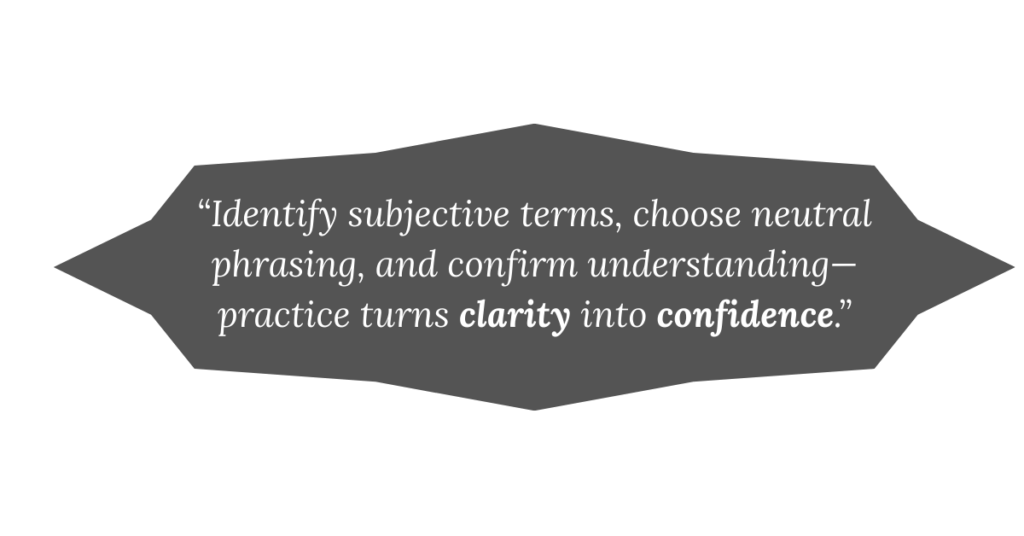
Consistent practice builds muscle memory, reducing hesitation in real conversations.
Overcoming Psychological Barriers
Many non-native speakers fear judgment or appearing “less intelligent” when asking questions. Strategies to overcome this include:
- Reframe Your Mindset: Questions show engagement, not ignorance.
- Roleplay Scenarios: Practice with a coach or peer.
- Track Progress: Keep a journal of questions you’ve asked and situations where clarity improved outcomes.
With deliberate practice, asking for clarification becomes natural, letting you ask what someone means confidently without hesitation.
Leveraging Technology and Resources
Modern tools can support confidence-building:
- Virtual meeting practice: Record yourself asking questions in simulated calls.
- Apps for language practice: Tools like Grammarly can suggest phrasing improvements. Use them actively as a way to support your learning instead of relying on them as a crutch.
- Feedback from mentors or colleagues: Request constructive feedback after meetings.

These resources reinforce strategies in our Accent Advantage Program, helping non-native speakers systematically build confidence
Final Thoughts and Action Steps
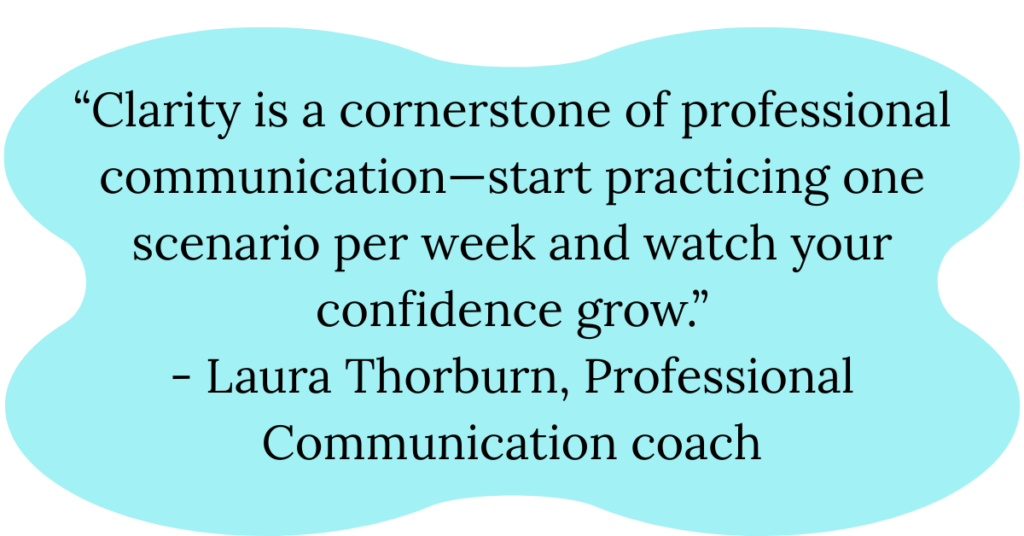
Clarity is a cornerstone of professional communication. By combining neutral phrasing, cultural awareness, practical scripts, and consistent practice, non-native speakers can ask what someone means confidently while maintaining authority. Start small—practice one scenario per week—and track progress. Over time, this skill will improve both comprehension and professional credibility.
Take action today by exploring personalized coaching in our Accent Advantage Program, designed to help professionals communicate with confidence in any context.