You send a text.
Then you stare at it.
Next, you rewrite it.
Eventually, you paste it into ChatGPT and ask, “Can you make this sound nicer?”
And suddenly… you’re not communicating. You’re outsourcing.
That’s the friction no one wants to admit: AI and social skills are starting to collide — and not in a good way.
Yes, AI can help us write faster.
Sure, it can polish tone.
And yes, it can reduce anxiety.
But here’s the uncomfortable truth:
The more we rely on AI to speak for us, the weaker our real-world communication muscles become.
Meanwhile unlike your biceps, you don’t notice communication atrophy until a conversation collapses in real time.
The Problem Isn’t AI — It’s Avoidance
Let’s be clear: AI isn’t evil. It’s efficient. It’s impressive. And honestly, it’s addictive.
However, efficiency is not the same as competence.
For example, when people use AI to:
- Rewrite texts
- Draft conflict emails
- Script difficult conversations
- Soften boundaries
- Translate tone
In those moments, they’re not practicing communication — they’re bypassing it.
And as a result, skills you bypass don’t develop.
In fact, as a professional communication coach, I see this pattern constantly:

Avoidance strengthens anxiety. Practice builds confidence.
So when AI becomes your default conversational middleman, your nervous system never learns, “I can do this myself.”
Instead, it learns, “Better not try without backup.”
That’s not empowerment.
Rather, that’s dependency — just with better grammar.
The Hidden Cost No One’s Talking About
Here’s the part that rarely makes the headlines:
You don’t just lose phrasing skills.
Over time, you lose emotional tolerance.
Real conversations involve:
- Pauses
- Awkwardness
- Tone misfires
- Emotional unpredictability
- Live feedback
AI removes all of that. Clean. Polished. Safe.
But here’s the problem: humans aren’t safe. They’re dynamic.
As a result, when people stop practicing live emotional exchanges, they become:
- More avoidant
- More brittle
- More anxious
- Less adaptable
- Worse at repair
In other words: The cost of convenience is resilience.
Research from Harvard’s Study of Adult Development shows that strong social connection predicts long-term well-being and professional success — not efficiency, not productivity, not optimization.
Why Common Advice Misses the Mark
You’ll hear:
“AI just saves time.”
“AI is just a tool.”
“AI is no different than spellcheck.”
At first glance, that advice sounds reasonable.
However, it skips something critical.
Spellcheck fixes surface errors.
AI reshapes thought structure, tone, emotional framing, and intent.
That’s not editing — instead, that’s substitution.
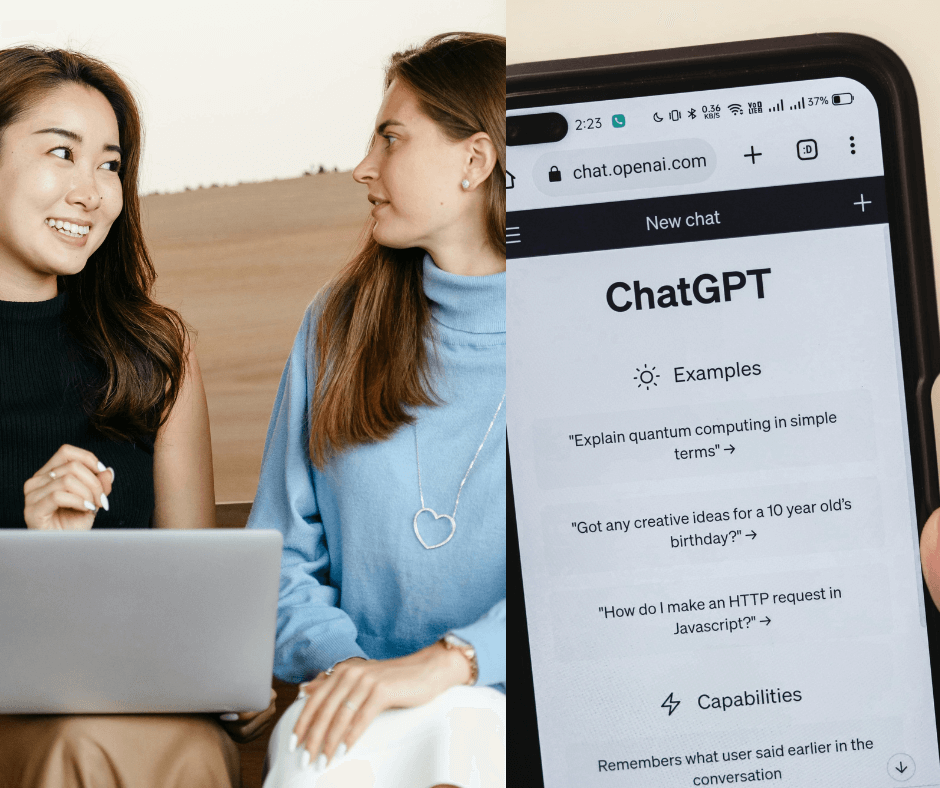
According to Time Magazine’s reporting on AI and social life, people are increasingly using AI to write texts, apologies, and emotionally sensitive messages — not just emails and memos.
As a result, when someone uses AI to:
- Express boundaries
- Apologize
- Navigate conflict
- Build rapport
They’re skipping the hardest part of communication:
formulating under emotional pressure.
And ultimately, that pressure is the skill.
Research from MIT Media Lab on cognitive offloading and AI reliance suggests that frequent AI assistance can weaken independent thinking and engagement — especially in interpersonal contexts.
What I See in My Work
In my work as a professional communication coach, I’m seeing something new:
Clients who:
- Sound polished in writing
- Freeze in real conversations
- Avoid hard talks
- Overthink tone
- Fear saying the wrong thing
Not because they lack intelligence — but because they lack practice tolerance.
They’ve optimized for correctness instead of connection.
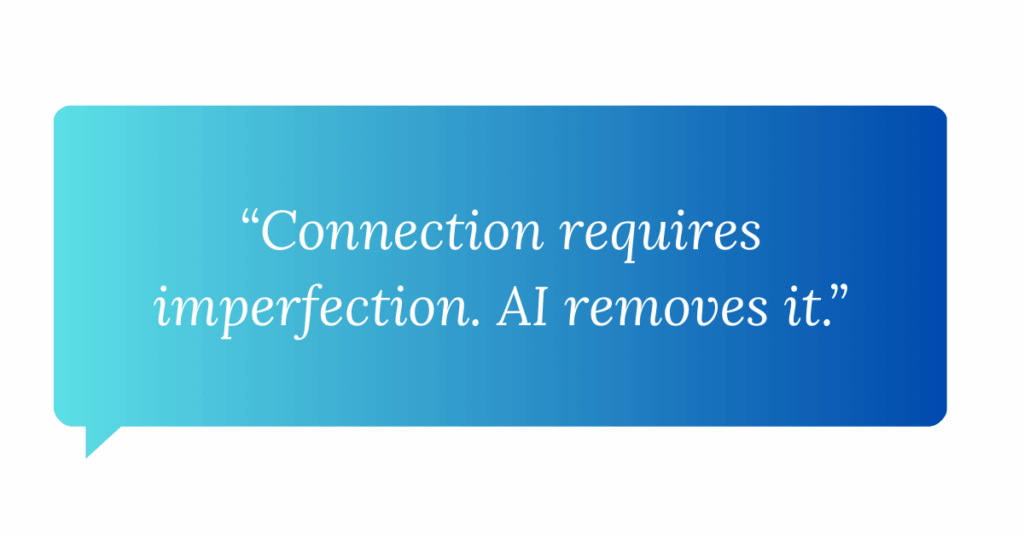
And yet, connection requires imperfection.
Where AI Actually Helps (When Used Well)
Let’s not throw the robot out with the bathwater.
Used intentionally, AI works beautifully for:
- Brainstorming
- Structuring ideas
- Clarifying drafts
- Expanding vocabulary
- Supporting non-native speakers
In fact, AI can pair well with Foundational Speaking Skills training and the Accent Advantage Program — when the goal is learning, not outsourcing.
At Speech Matter Expert, we teach clients how to:
- Draft with AI
- Then speak it aloud
- Then reformulate live
- Then adjust under pressure
Because transfer beats polish every time.

The Short Version (Because Your Brain Is Busy)
Here’s the bottom line:
- AI improves output — not confidence
- Avoidance strengthens anxiety
- Real conversations require emotional tolerance
- Practice builds formulation speed
- Over-polished communication weakens adaptability
- Connection grows through imperfection
- AI should support learning — not replace it
Are We Actually Losing Our Social Skills?
Short answer:
We’re not losing them — we’re neglecting them.
And unfortunately, neglected skills don’t disappear.
Instead, they just feel terrifying when suddenly needed.
That’s why people now panic over:
- A difficult text
- A boundary conversation
- A feedback moment
- A networking intro
- A conflict discussion
Not because they’re incapable — but because they’re unpracticed.
AI didn’t cause the anxiety.
Rather, it simply made avoidance easier.
Ready to Sound Like Yourself Again?
If you’re someone who wants to:
- Speak clearly without overthinking
- Handle conversations without scripts
- Build confidence instead of dependence
- Trust your voice in real time
Then this is exactly the work we do at Speech Matter Expert.
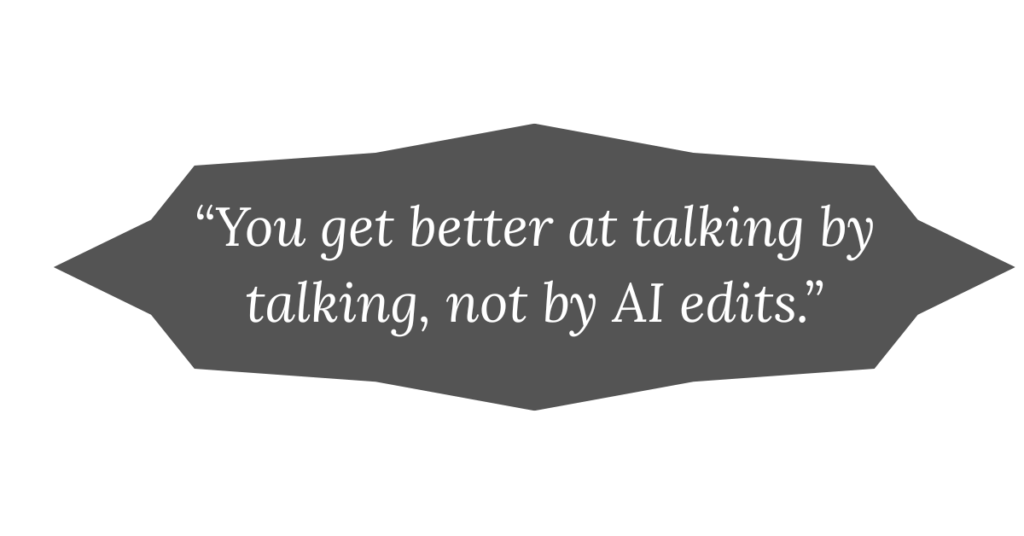
Start with our Foundational Speaking Skills program or explore our Communication Coaching services — and rebuild confidence the old-school way: through practice, not ‘program’.