When people think about accents, they usually think about sounds. Yet speech pacing for accent modification matters just as much. Your pace affects clarity, confidence, and how natural your English sounds.
If your speech moves too fast, listeners miss words. If it moves too slowly, you may sound unsure. Either way, meaning gets lost. That’s why pacing is often one of the fastest ways to improve communication — even before perfect pronunciation.
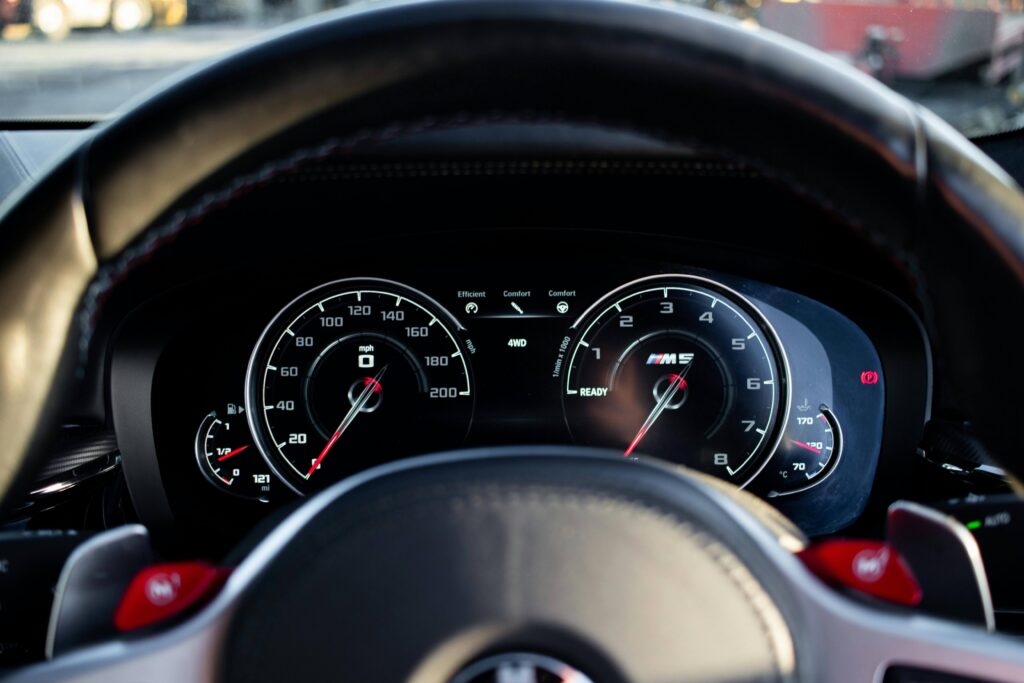
Think of your speech like driving a car. Every language has a different speed limit. When your internal speedometer doesn’t match your listener’s expectations, communication feels bumpy. Fix the speed, and suddenly the ride gets smoother. Many pacing breakthroughs come from mastering breathing, pausing, and phrasing — skills taught in our Foundational Speaking Skills program.
Why Languages Have Different Speaking Rates
Languages do not move at the same speed. This difference is not random.
Some languages use shorter syllables. Others rely more on stress patterns. As a result, speakers from different language backgrounds may sound fast, slow, flat, or choppy in English — even when grammar and vocabulary are strong.
According to research published in Science Advances, languages transmit information at nearly the same overall rate. However, they reach that rate using very different rhythms and syllable speeds.
In other words, your brain is not wrong. It is simply tuned to a different rhythm system.
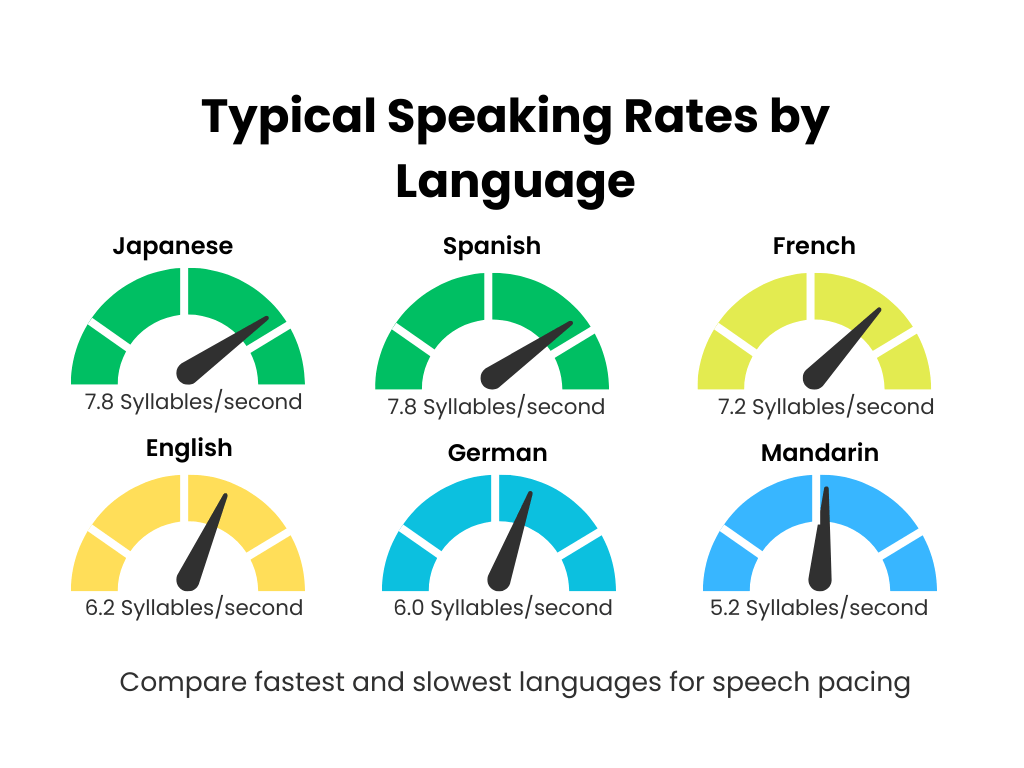
Fastest vs Slowest Languages by Typical Speech Rate
If you grew up speaking Spanish or Japanese, your brain learned to move faster syllable by syllable. Meanwhile, English depends more on stress timing and pausing. Therefore, the mismatch often causes listeners to struggle — not your intelligence or effort.
Studies measuring syllables per second show clear patterns across languages.
Fastest Languages (Average Conversational Speech)
- Japanese – ~7.8 syllables per second
- Spanish – ~7.8 syllables per second
- French – ~7.2 syllables per second
Slowest Languages
- Mandarin Chinese – ~5.2 syllables per second
- German – ~5.9 syllables per second
- English – ~6.2 syllables per second
(Source: Linguistic Society of America)
Credible research on this comes from CNRS language speed research and The Language Nerds breakdown of fastest languages.
Why “Just Slow Down” Doesn’t Work
Many people are told to “just slow down” when their speech feels hard to follow. However, that advice often misses the point.
Pacing is not only about speed. It is about where you pause, which words you stress, and how you group ideas. When speakers slow down without retraining rhythm, they often sound robotic or lose fluency. As a result, clarity can actually decrease.
Speech pacing for accent modification works differently. Instead of forcing slowness, it retrains timing and flow. That way, speech sounds clearer without sounding unnatural.
In short: we are not hitting the brakes. We are improving the transmission.
Your Speech Is a Speedometer, Not a Brake Pedal
Think of your voice like a dashboard gauge. Your native language trained your internal speedometer. When you switch to English, that speed setting often stays the same — even though the road rules changed.
Most advice tells speakers to hit the brakes. But brakes alone don’t fix bad driving. You also need steering, timing, and awareness of the road. The same is true for speech.
That’s why speech pacing for accent modification focuses on:
- Where to pause
- Which words to stress
- How to group ideas
- When to maintain flow
Many pacing breakthroughs come from mastering breathing, pausing, and phrasing — skills taught in our Foundational Speaking Skills program.
Practical Ways to Improve Speech Pacing
1. Record Yourself
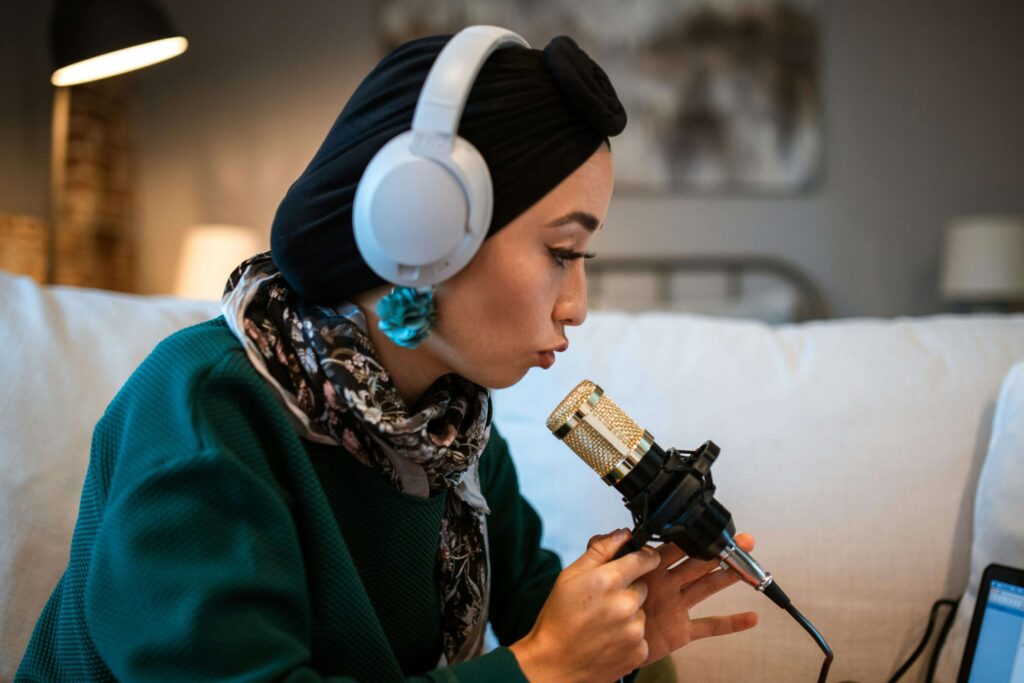
First, record a short explanation of something familiar. Then listen back. Do you rush through key words? Do your sentences trail off? Awareness alone fixes half the problem.
2. Chunk Your Sentences
English relies on stress and pausing more than syllable timing. Try breaking sentences into meaning chunks instead of speaking in one long stream. This instantly improves clarity.
3. Shadow Native Speakers
Choose a short clip and repeat it out loud right after the speaker. This trains your brain and mouth to match natural English rhythm. It’s one of the fastest pacing drills available.
Why Working With a Professional Speeds Results
Self-practice works — but it’s slower. Most people can’t hear their own pacing distortions in real time. A professional coach gives instant feedback and targeted drills based on your exact speech patterns.
More importantly, coaching helps you recalibrate your internal speedometer so pacing becomes automatic. You’re not thinking about slowing down. You’re just speaking clearly.
That’s the real goal of speech pacing for accent modification — effortless clarity, not robotic control. If you want structured, personalized support, the Accent Advantage Program helps professionals retrain speech rhythm while preserving identity and confidence.

Final Thoughts: Tune the Speed, Not the Speaker
You don’t need to erase your accent. You don’t need to sound like someone else. You just need your speech speed to match listener expectations. When pacing improves, comprehension improves. Confidence follows.
If you’re ready to stop hearing “just slow down” and start getting real tools that work in meetings, presentations, and conversations, explore Speech Matter Expert communication coaching — including our article on strategic pausing.